Choosing among the Top Water Bottling Plant Manufacturers for Global Buyers requires more than comparing machine speeds. Buyers must match production capacity, bottle formats, filling technology, and service support to real market conditions. A line that runs smoothly on a factory tour may still struggle with frequent format changes or inconsistent local utilities.
The scale is substantial. A 2023 report from the United Nations University Institute for Water, Environment and Health estimated global bottled-water consumption at about 350 billion liters in 2021. That figure signals demand, but it does not predict orders for any individual plant. Local sales, seasonality, distribution distance, and packaging preferences matter. Small details matter, too: a delayed replacement valve can stop a filling line as surely as a major equipment fault.
Beverage-market analyst John G. Rodwan Jr. provides a useful demand-first perspective through his market analysis. Paraphrased for plant selection: “Size capacity against verified local demand, not global headlines.” Treat that as a planning principle, not a verbatim quotation. Compare manufacturers on documented output, changeover time, cleaning design, spare-parts access, and commissioning support. Ask for references from facilities using similar bottle sizes and operating conditions. Then check whether quoted performance includes the complete line, from water treatment through packing. Not just the filler. Reliable comparisons need clear assumptions, independently checkable specifications, and room for uncertainty. A little skepticism helps.
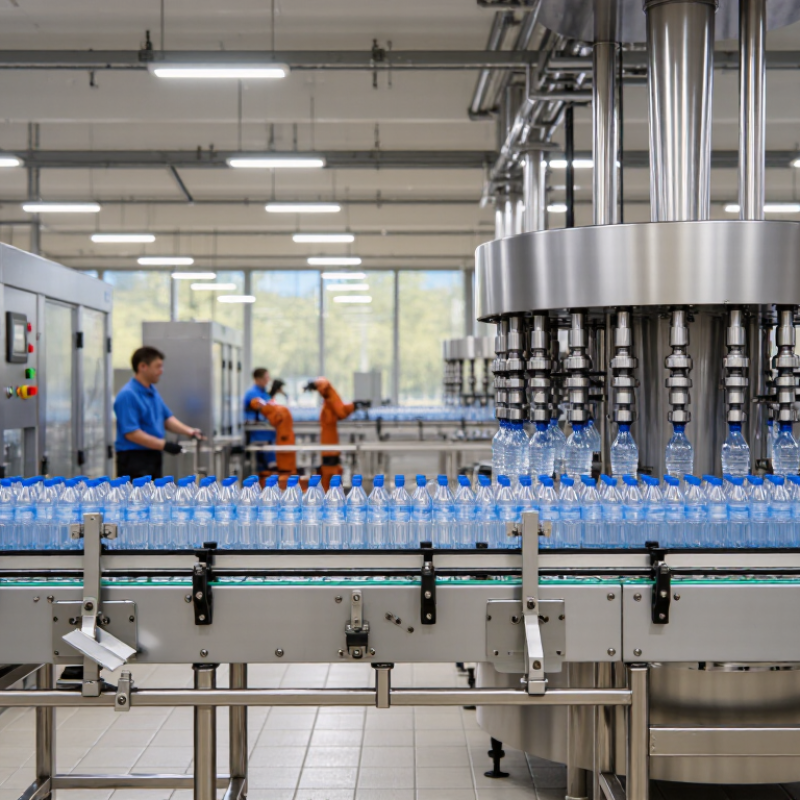
Water bottling plants are not simply filling lines; they are coordinated systems for treatment, rinsing, filling, capping, inspection, and packaging. The right configuration depends on source-water quality, bottle formats, local utilities, and expected output. Small details matter. A line designed for steady production may struggle when frequent format changes interrupt operation.
The International Bottled Water Association, using Beverage Marketing Corporation data, reported that U.S. bottled water consumption reached 15.4 billion gallons in 2023, or 45.2 gallons per person. This is one market indicator, not a global forecast. For manufacturers, it highlights why buyers examine line speed, energy use, water recovery, and service access together. Fast equipment alone is not enough. The WHO/UNICEF Joint Monitoring Programme estimated that 2.2 billion people lacked safely managed drinking water in 2022. Bottling plants cannot replace reliable public water systems, and responsible planning must account for source sustainability and local needs.
When comparing plant suppliers, buyers should request clear specifications for hygienic design, cleaning cycles, changeover time, and spare-parts availability. Ask how quoted capacity was measured; “bottles per hour” can hide assumptions about container size and downtime. Installed capacity may look impressive on paper, yet a humid floor, unstable power supply, or delayed maintenance can change the result. That deserves a closer look.
When evaluating water bottling plant manufacturers, compare complete production lines, not headline speed alone. Ask for verified output rates using your bottle size, water type, and packaging format. A line rated at 12,000 bottles per hour may deliver less when changeovers or short stops are included. Small details matter. Check whether the proposal covers rinsing, filling, capping, labeling, conveyors, and coding.
Request layout drawings, utility estimates, and a clear list of included equipment. Confirm what materials touch the water and how operators clean the filling area. Ask for references from plants with similar capacity, then discuss maintenance access and spare-part availability. A factory acceptance test can reveal issues before shipment; agree on measurable acceptance criteria in writing. Service response times matter too, especially when local technicians are limited. Do not rush. A polished brochure is useful, but it cannot replace technical documentation. I would also leave room for doubt: projected output and energy use can vary in real operating conditions.
Tips: Compare total installed cost, not just machine price. Ask who trains operators, what routine maintenance requires, and which parts should be kept on site. Request sample records, but verify them independently.
For global buyers, a water bottling plant manufacturer should provide more than a high-speed filling machine. A complete line may include bottle rinsing, filling, capping, labeling, inspection, and case packing. The right configuration depends on bottle size, closure type, expected output, and available floor space. Small details matter. Ask manufacturers to test your actual bottles and caps, since sample runs can reveal leaks, jams, or label misalignment before shipment.
Equipment capability also means dependable integration. Conveyors, sensors, control systems, and utility requirements must work together, not just look impressive in a proposal. Request clear line-speed assumptions, maintenance schedules, spare-parts guidance, and commissioning support. Check how product-contact surfaces are cleaned and what records are available for factory testing. These details help buyers compare technical claims with practical evidence. A polished brochure can still leave important gaps. One easy mistake is comparing filling speeds without checking whether the entire line can sustain them. Plan for local operating conditions, too, including power supply, water quality, and operator training. A careful review may take longer, but it can prevent costly surprises after installation.
The comparison below summarizes common equipment capability bands offered in the market. Profiles are generic, not company-specific; actual specifications depend on bottle size, water source, product requirements, and line configuration.
| Supplier Capability Profile | Typical Line Output | Water Treatment Equipment | Bottle and Filling Equipment | Packaging Equipment | Typical Buyer Fit |
|---|---|---|---|---|---|
| Compact line supplier | Approximately 2,000–8,000 bottles per hour; output varies by bottle size and format. | Pretreatment, filtration, and reverse-osmosis systems; treatment capacity is selected to match the source water and production demand. | Standalone or compact integrated rinsing, filling, and capping equipment; PET bottle handling may be manual or automated. | Basic conveyors, date coding, label application, and shrink wrapping or carton packing. | Small and regional plants, new market entrants, and facilities with limited floor space. |
| Mid-range line integrator | Approximately 8,000–24,000 bottles per hour; quoted rates should specify the bottle format and test conditions. | Integrated filtration and reverse osmosis, with options such as UV treatment or ozonation where appropriate to the process design. | Automated PET handling and monoblock or linked rinsing, filling, and capping systems; change parts may support multiple bottle formats. | Automatic labeling, conveyors, shrink bundling, and case-packing options. | Growing producers seeking a coordinated line with a moderate level of automation. |
| High-speed turnkey integrator | Approximately 24,000–60,000+ bottles per hour on some configurations; upper-end rates are generally format- and project-specific. | Plant-scale treatment, storage, and process-water systems engineered around water analysis, required flow, and applicable regulations. | High-speed blow-molding options, air conveyors, and integrated filling and capping blocks, subject to the selected container and line layout. | High-throughput labeling, pack formation, case packing, palletizing, and line-control integration. | Large-volume plants prioritizing high automation, coordinated commissioning, and production monitoring. |
| Modular equipment specialist | Capacity depends on the modules selected; individual treatment, filling, or packaging equipment can be specified separately. | May supply selected treatment stages or packaged treatment skids rather than a complete water-processing plant. | Specialized equipment can be integrated with existing upstream or downstream machinery, subject to interface and controls compatibility. | Individual labeling, conveying, wrapping, or palletizing units can be added as production needs grow. | Existing plants upgrading one process stage or building capacity in phases. |
Note: Output figures are broad market benchmarks, not guarantees or ratings for any specific supplier. Request confirmed production rates for the intended bottle volume, material, pack format, and operating conditions.
Modern bottling plants combine water treatment, hygienic filling, and real-time monitoring. Treatment may include filtration, ultraviolet disinfection, or other processes selected for the source water. Operators verify performance through routine sampling and equipment checks. Clear records help trace changes in water quality or production conditions.
Filling technology protects product quality while managing speed and container handling. Automated rinsing, precision filling valves, and controlled capping reduce spills and inconsistent fill levels. Sensors can flag a blocked nozzle or an unusual pressure change before it affects a full production run. Even so, automation is not a substitute for trained staff. A sensor can detect a fault, but someone must interpret it.
Energy and water efficiency also shape modern plant design. Variable-speed pumps can adjust to demand, while heat recovery and rinse-water reuse may reduce resource consumption. Reuse systems need careful monitoring. Poorly managed ones can create new hygiene risks. Maintenance access matters, too; a compact line may look efficient on paper but be difficult to clean. Small details matter. Buyers should compare technologies against local water conditions, production targets, and the skills available to operate and maintain the plant.
Global buyers comparing water bottling plant manufacturers should begin with the product and target output, not a brochure’s headline speed. Define bottle sizes, material, filling method, and expected shifts per day. Ask suppliers to show how their line handles a specific format change, such as switching from a 500 ml bottle to a 1.5 L bottle. Request equipment layouts, utility requirements, and documented production data. Compare the same figures across proposals. Details matter.
Plan the purchase around the whole installation. Confirm what is included: conveyors, coding equipment, installation, operator training, and spare parts. Ask how the supplier tests the line before shipment and what support is available during commissioning. A factory visit can reveal practical details, like access for cleaning or the space needed to replace a pump. If travel is not possible, request a live video walkthrough. I would still treat a video as limited evidence; it cannot show every operating condition.
Tips: Share your product specifications in writing. Ask for references from comparable installations. Leave room in the schedule for site preparation and adjustments.
Headline speed may exclude changeovers and short stops. Ask for verified output using your bottle size, water type, and packaging format. Reality varies.
Check for rinsing, filling, capping, labeling, conveyors, and coding equipment. Request layout drawings and utility estimates, too. Details matter.
Agree on measurable acceptance criteria before shipment. A factory acceptance test can reveal problems early, but results may differ at your site.
Ask which treatment processes suit your source water and how operators clean the filling area. Confirm what materials contact the water. Keep records.
No. Sensors can flag blocked nozzles or unusual pressure changes, but trained staff must interpret alerts and respond.
Variable-speed pumps, heat recovery, and rinse-water reuse may help. Reuse needs careful monitoring because poor management can create hygiene risks.
Compare documented output, equipment, utilities, and total installed cost. Check references from similar plants and verify sample records independently.
Ask who installs the line, trains operators, and supplies spare parts. Confirm commissioning support and service response times. Plan extra time.
Look for cleaning access and room to replace a pump. A video helps, but it cannot show every operating condition. I would remain cautious.
Choosing the right Water Bottling Plant manufacturer requires understanding the global industry and the range of equipment available for different production needs. Buyers should assess each supplier’s experience, engineering capabilities, equipment quality, customization options, installation support, and access to maintenance and spare parts. Comparing these factors helps distinguish a complete production solution from a collection of individual machines.
Modern bottling plants may integrate water treatment, rinsing, filling, capping, labeling, packaging, and automated quality monitoring. When comparing suppliers, buyers should consider production capacity, bottle formats, energy and water efficiency, automation level, facility requirements, and plans for future expansion. A clear purchase plan should define technical specifications, budget, delivery expectations, commissioning, training, and after-sales service. Careful evaluation and direct discussion of requirements can help global buyers select equipment suited to their operations and long-term goals.