Explore our export-certified monoblock bottling lines engineered for mineral water, carbonated soft drinks, fruit juice, craft beer, and high-viscous liquids.
Hot Fill / PET
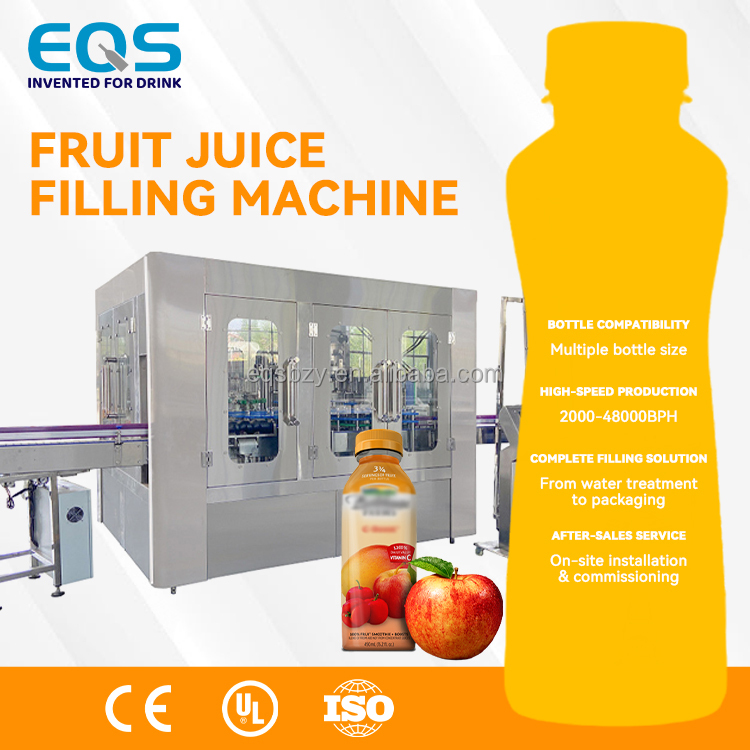
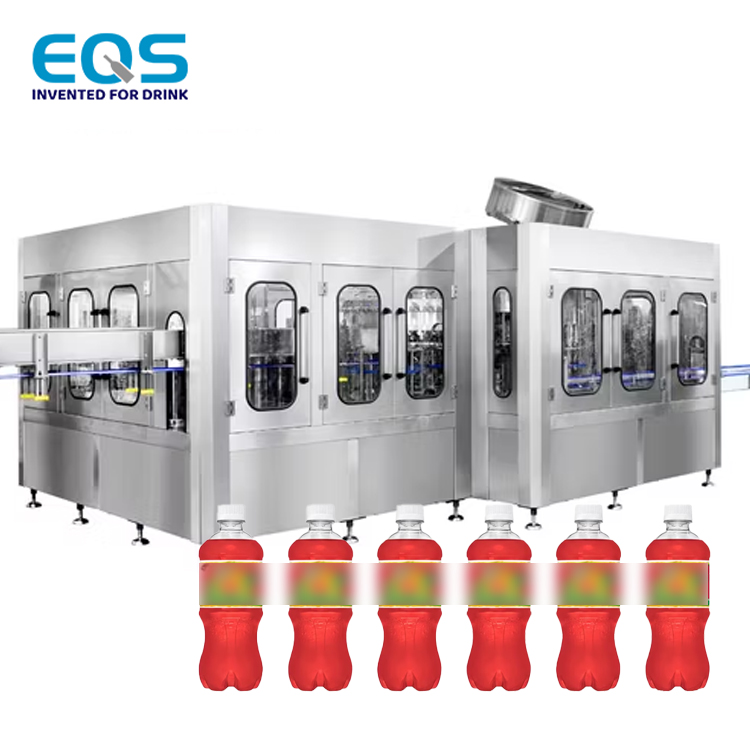
A to Z Automatic Hot Filling Bottling Capping Machine Juice Beverage Production Equipment
Complete turnkey juice line integrating UHT thermal processing, bottle rinsing, thermal filling (85-92°C), cap tilting sterilizer, and cooling tunnel.
High Speed / Glass
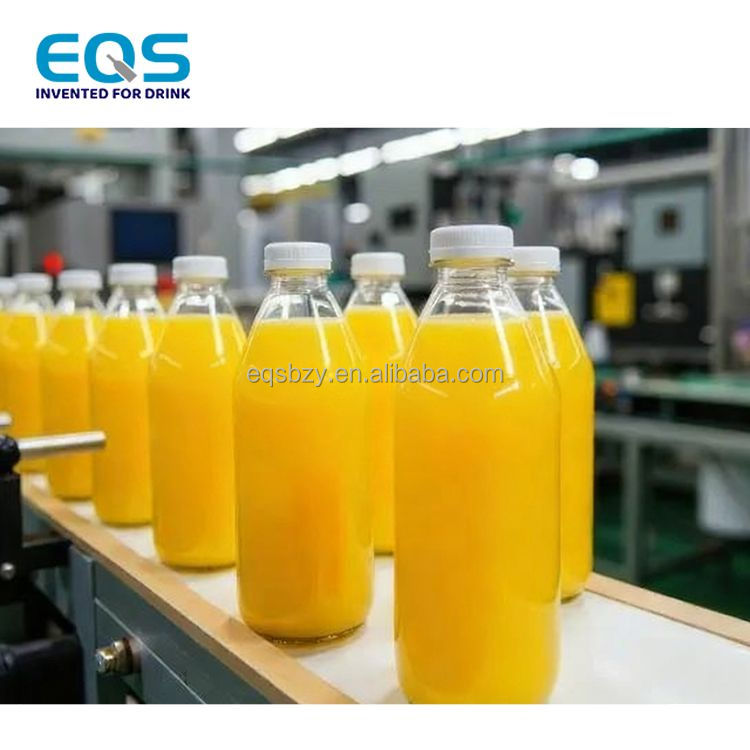
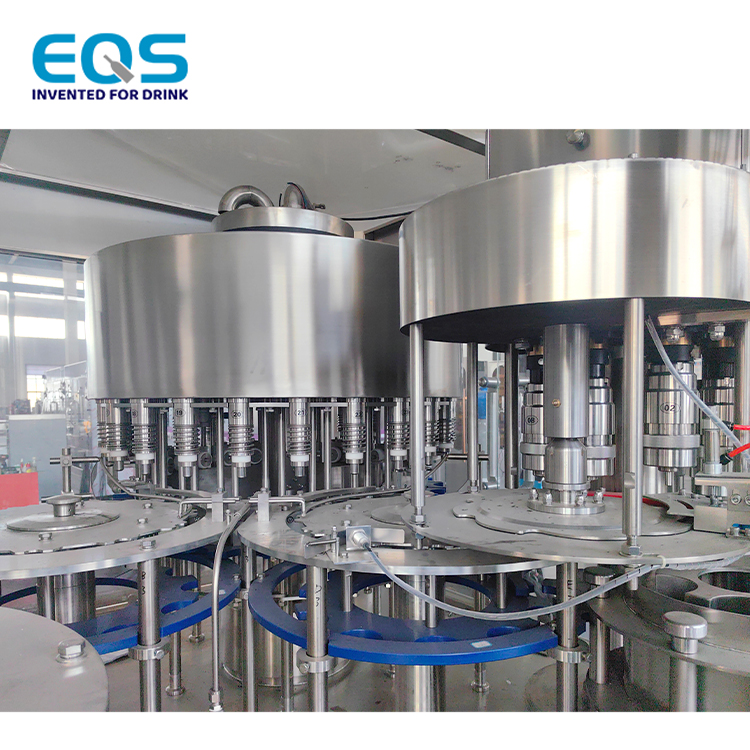
Automatic 20000BPH High Speed Glass Bottle Hot Filling Washing Filling Capping Monoblock
Ultra-fast rotary glass bottle packaging solution engineered for premium fruit juices and tea beverages with precision liquid level control.
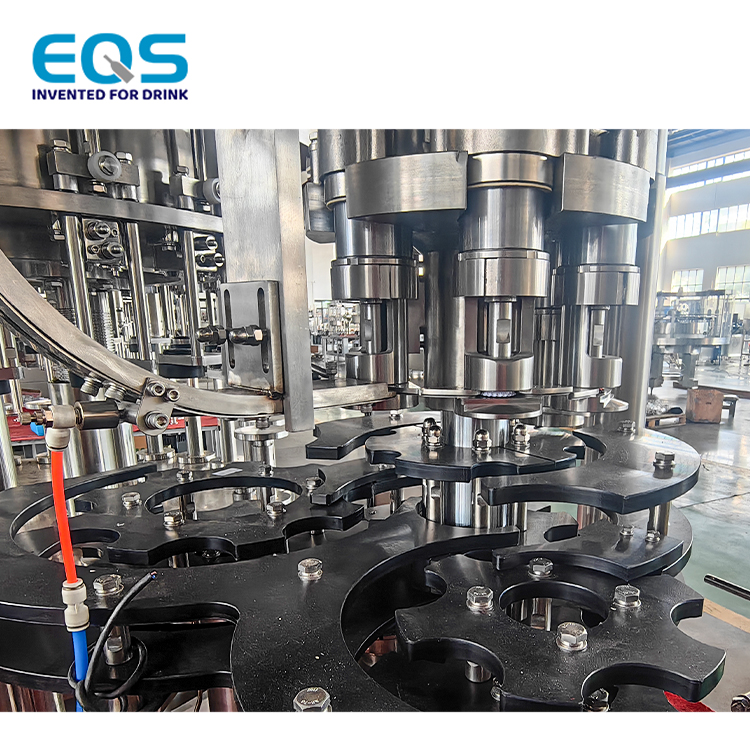
Double pre-evacuation isobaric filler minimizing dissolved oxygen (DO) pickup to maintain maximum freshness and shelf life for glass bottle beer.
4-in-1 / Pulp Juice
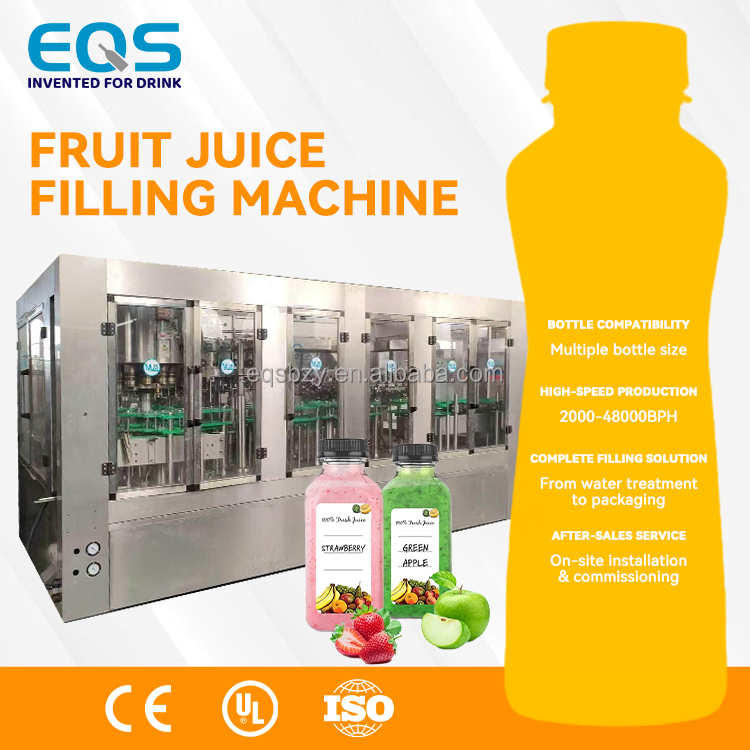
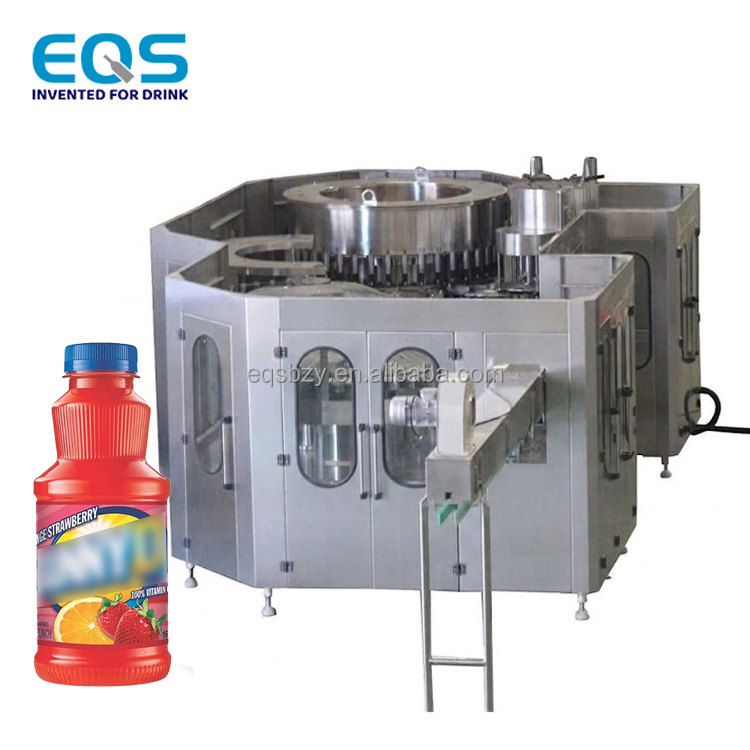
Industrial 4-in-1 Fruit Juice Filling Machine with Pulp PET Bottle Beverage Bottling Line
Specialized dual-filling system designed to handle real fruit pulp dosage followed by liquid juice topping off without clogging nozzles.
CSD / Energy Drink
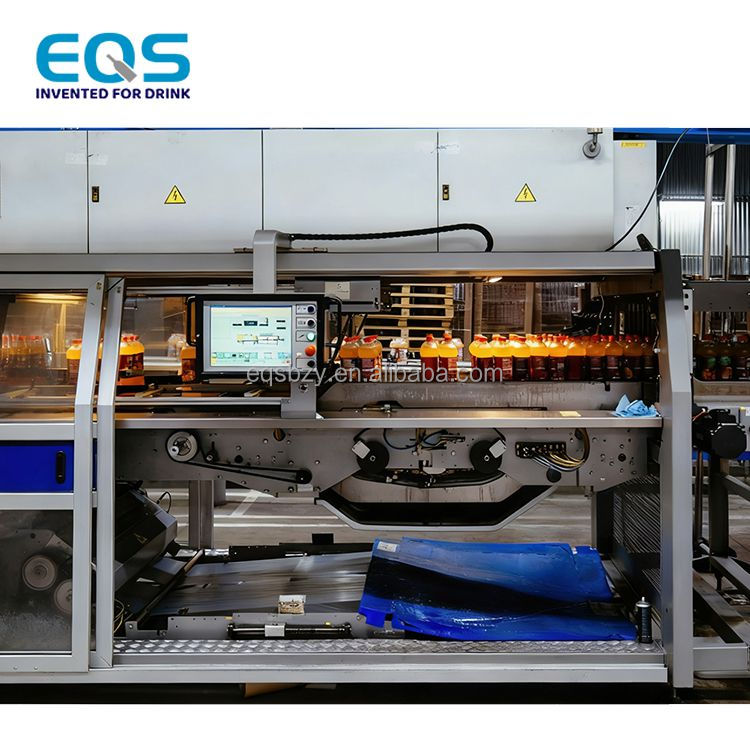
Complete Carbonated Soft Drink and Energy Drink Making Machine Filling Production Line
Integrated CSD bottling system featuring high-precision carbonation mixers, pressure-equalized filling valves, and shrink-wrap packaging.
Full Line / Processing
Advanced Full Set Fruit Juice Production Line From Mixing Filling to Labeling and Packing System
End-to-end beverage engineering from raw ingredient dissolving and syrup tanks to automatic sleeve labeling and master carton packing.
PET / Monoblock
Complete 4-in-1 Fruit Pulp Juice Bottling Line Automatic PET Beverage Filling Machine Equipment
Advanced compact 4-in-1 architecture combining bottle sanitizing, fruit particle dosing, liquid filling, and magnetic capping into one seamless block.
Water / Multi-Container
Industrial End-to-End Water Bottling Plant Integrated Line Solution for Glass PET Bottles
Heavy-duty water bottling plant incorporating Reverse Osmosis (RO) filtration, high-efficiency blow molding, and ultra-clean gravity filling.
Strategic Sourcing Guide: Liquid Filling Machine Manufacturing in China
The global liquid packaging machinery sector is undergoing a massive paradigm shift. As international beverage brands, contract packers, and regional water bottlers seek higher operational efficiency (OEE), lower total cost of ownership (TCO), and stricter microbiological security, China has emerged as the premier global epicenter for high-precision liquid packaging machinery. Centered in Zhangjiagang, Jiangsu, industrial clusters like Zhangjiagang OGVU Machinery Co., Ltd. represent the pinnacle of Chinese beverage machinery engineering—combining European technological standards with unmatched supply chain agility.
Modern bottling lines are no longer mere mechanical assemblies; they are highly integrated cyber-physical production systems. Selecting the ideal supplier requires a granular understanding of liquid dynamics, thermodynamic pasteurization cycles, filling valve fluid mechanics, and microbiological validation protocols. This technical white paper provides industrial buyers with the definitive procurement framework for selecting, configuring, and commissioning liquid filling machinery from China's leading exporters.
Core Procurement Insight: The true bottleneck in a bottling line rarely lies in the nominal speed of the filler. It stems from unbalanced line synchronization between water treatment systems, bottle blowing combi-blocks, thermal pasteurizers, and downstream shrink wrapping machinery. Working with a verified turnkey systems integrator ensures seamless line balancing and zero thermal dropoffs.
Comparative Analysis of Core Filling Methodologies
Choosing the correct filling technology is the fundamental architectural decision of any liquid packaging project. The thermodynamic properties of the liquid—such as viscosity, surface tension, carbonation level, thermal stability, and microbial vulnerability—dictate the required valve engineering and sanitation protocols.
Filling Technology
Operating Principle
Target Beverage / Liquid
Microbiological Security
Key Engineering Metric
Isobaric (Counter-Pressure)
Pressure equalization via CO2 gas backpressure prior to liquid release.
Volumetric dosing accuracy ± 0.2%; Zero cross-contamination
Detailed Engineering Breakdown of Liquid Filling Technologies
1. Isobaric Counter-Pressure Filling for Carbonated Drinks and Beer
Carbonated beverages require precise pressure management to keep dissolved carbon dioxide (CO2) in solution during liquid transfer. In OGVU's advanced isobaric filling valves, the container is sealed against the valve gasket, after which pressurized CO2 gas is injected to match the internal pressure of the storage bowl (typically 0.2 to 0.4 MPa). Once pressure equilibrium is established, the spring-loaded liquid valve opens, allowing the beverage to slide down the inner bottle wall via a specialized swirl nozzle. This minimizes turbulent agitation and foaming. For brewery applications, OGVU incorporates double pre-evacuation vacuum technology, evacuating atmospheric air down to 99% before CO2 purging, successfully driving dissolved oxygen (DO) pickup levels down to ultra-low thresholds that protect beer flavor profile and extend shelf life.
2. Thermal Hot Filling Systems for Fruit Juices and Teas
Hot filling relies on the beverage itself to act as the thermal sterilizing agent for the bottle interior and cap seal. Processed juice flows through a Tubular UHT Pasteurizer reaching 95°C before entering the rotary filling monoblock at a tightly controlled 85-92°C. OGVU hot fill monoblocks feature a continuous thermal recirculation loop: if line speed slows down or stops, liquid automatically recirculates back to the pasteurizer heating unit to prevent temperature drops. Following capping, bottles pass through a 180-degree Cap Tilting Sterilizer conveyor to ensure thermal pasteurization of the cap liners, followed by a multi-stage Cooling Tunnel that gradually reduces bottle temperature down to 30°C, avoiding thermal shock distortion of PET bottles.
Aseptic cold filling represents the pinnacle of modern liquid packaging engineering. Unlike hot filling, which requires heavy, heat-resistant PET bottles with structural vacuum panels, aseptic technology fills room-temperature sterile liquids into lightweight PET containers inside an isolator enclosure maintained under positive sterile air pressure (HEPA filter Class 100). The preforms or blown bottles undergo internal and external sanitization using vaporized hydrogen peroxide (VHP) or peracetic acid (PAA), followed by sterile water rinsing. By eliminating prolonged heat exposure, aseptic cold filling preserves heat-sensitive vitamins, natural colors, and fresh flavor profiles while reducing PET raw material weight by up to 30%.
The liquid packaging industry is experiencing rapid evolution driven by international sustainability mandates, rising energy costs, and digital transformation. Global buyers sourcing filling equipment from China must align their procurement strategies with several key technological trajectories over the next decade:
Blowing-Filling-Capping Combi-Block Integration
Eliminating intermediate air conveyors, traditional bottle rinsers, and accumulation tables. Combi-blocks directly couple stretch blow molding with filling and capping, reducing factory footprint by 30%, cutting electricity consumption by 25%, and eliminating airborne contamination risks.
Industry 4.0 IoT & Smart Predictive Maintenance
Next-gen Chinese filling machinery comes standard with Siemens/Mitsubishi PLC control, edge computing sensors, and cloud communication protocols. Operators can monitor Real-Time OEE, vibration spectrum analysis of filling valves, seal wear metrics, and remote diagnostic fault tracing from anywhere worldwide.
Lightweighting & Eco-Packaging Compatibility
Global plastic reduction mandates require filling machinery capable of handling 100% rPET (recycled polyethylene terephthalate), ultra-thin bottle neck designs (such as 26/22 light necks), tethered cap compliance (EU Directive 2019/904), and seamless switching to aluminum sleek cans.
Enterprise Advantage: Why Global Bottlers Partner with OGVU Machinery
Zhangjiagang OGVU Machinery Co., Ltd. has established itself as an authoritative leader among Chinese liquid packaging equipment manufacturers. Our engineering design philosophy centers on total operational reliability, rigorous quality control, and comprehensive post-sale support.
Third-Party Audited Quality (Intertek Verified): Our manufacturing facilities, machining capabilities, and business operations are independently inspected and verified on-site by Intertek, providing international buyers with 100% transparency and security.
Export Compliance & CE Marking: All core machine series—including water fillers, CSD isobaric monoblocks, beer lines, and juice hot fill systems—comply fully with European CE safety and electromagnetic compatibility standards.
Turnkey Engineering Competence: We provide full end-to-end plant responsibility: Water Treatment (RO/UF/Ozone) → Beverage Processing System → Stretch Blow Molding → Monoblock Filling & Capping → Conveyor Systems → Labeling (Sleeve/OPP/BOPP) → Secondary Packaging (Shrink Wrap / Carton Case Packer) → Robotic Palletizer.
Multilingual Expatriate Engineering Service: OGVU supports global clients with direct on-site installation, commissioning, and operator training conducted by experienced field engineers fluent in English, Spanish, Russian, and Chinese.
Buyer Knowledge Base
Frequently Asked Questions in Liquid Filling Machine Sourcing
Expert technical answers to critical engineering, installation, and procurement questions raised by international bottling equipment buyers.
Q1: How do I determine the precise filling technology required for my specific beverage product?
The decision is governed by product formulation and shelf-life requirements. Still water requires atmospheric gravity filling. Carbonated soft drinks (CSD) and beer require isobaric counter-pressure filling with gas backpressure and vacuum pre-evacuation to retain CO2 and control dissolved oxygen. Juices, ready-to-drink teas, and energy drinks containing natural sugars typically utilize hot filling (85–92°C) coupled with a cooling tunnel. Preservative-free dairy, plant milk, or fresh juice requires aseptic cold filling in a sterile cleanroom environment. Viscous sauces, edible oils, and syrups rely on servo-driven piston fillers or mass flowmeter filling valves.
Q2: What detailed technical data is needed to receive an accurate turnkey line layout proposal?
To generate an optimized factory layout drawing and equipment configuration, please supply: (1) Liquid type and physical properties (viscosity, carbonation level, acidity); (2) Container material (PET, Glass, Can) and bottle drawing blueprints across all target volumes (e.g., 330ml, 500ml, 1.5L); (3) Target production capacity in bottles per hour (BPH); (4) Cap specification (sports cap, screw cap, crown cork, aluminum seal); (5) Secondary packaging preference (film shrink wrap, wrapped-around carton); and (6) Factory workshop dimensions, ceiling height, utility specs (voltage, frequency, compressed air supply).
Q3: Can a single OGVU rotary filling monoblock run multiple bottle sizes and shapes?
Yes. OGVU rotary monoblocks are designed with neck-handling starwheel technology (for PET bottles) or base-adjusting platforms (for glass bottles). A single machine can comfortably process multiple bottle volumes (e.g., 250ml to 2.0L) provided the neck finish remains identical. Transitioning between different bottle diameters or heights is accomplished within 15 to 30 minutes using quick-change format changeover parts (infeed screws, starwheels, guide curves, and height elevation jacks).
Q4: How does OGVU ensure machine quality, electrical component reliability, and factory testing prior to export shipment?
We adhere to a rigorous Quality Management System. All mechanical contact parts are fabricated from food-grade Stainless Steel SUS 304 or SUS 316L. Electrical and pneumatic components are sourced exclusively from top-tier global brands (Siemens PLC/HMI, Schneider contactors, Festo/Airtac pneumatics, Sick sensors, SEW motor reducers). Prior to shipment, every machine undergoes a continuous 72-hour Factory Acceptance Test (FAT) running actual bottles and liquid to verify filling accuracy, capping torque, mechanical stability, and safety interlocks. Video FAT reports are supplied to international buyers.
Q5: What are the terms for overseas installation, commissioning, operator training, and spare parts availability?
OGVU provides comprehensive global technical field service. We dispatch qualified commissioning engineers to your factory site to supervise foundation positioning, piping connections, electrical wiring, fine-tuning of machine parameters, and line integration. Our team conducts hands-on operational and preventive maintenance training for your local technical staff. All machines come with a standard 12-month warranty, a wearing spare parts package, and 24/7 remote technical diagnostic support via video linkage. Spare components are stocked in our central warehouse for express international air courier delivery.
Ready to Engineering Your Next Bottling Line Project?
Consult directly with OGVU senior mechanical engineers. We will analyze your liquid parameters, design custom CAD workshop layouts, and deliver a comprehensive turnkey proposal within 24 hours.