Flagship Soft Drink & Liquid Bottling Equipment
Engineered for high throughput, minimal yield loss, and strict ISO/CE sanitary compliance. Explore our top-tier automatic beverage processing and bottling monoblocks.
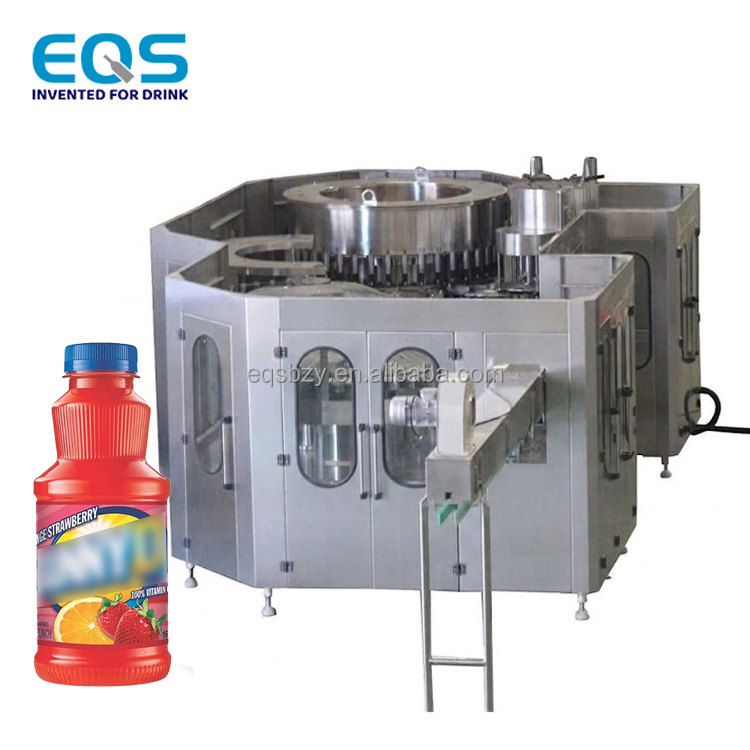
Complete 4-in-1 Fruit Pulp Juice Bottling Line Automatic PET Beverage Filling Machine Equipment
- Filling Tech: Pulp Injection + Hot Fill
- Bottle Material: PET (Heat-Resistant)
- Capacity: 3,000 - 18,000 BPH
- Sanitary Class: SUS316L Contact Parts
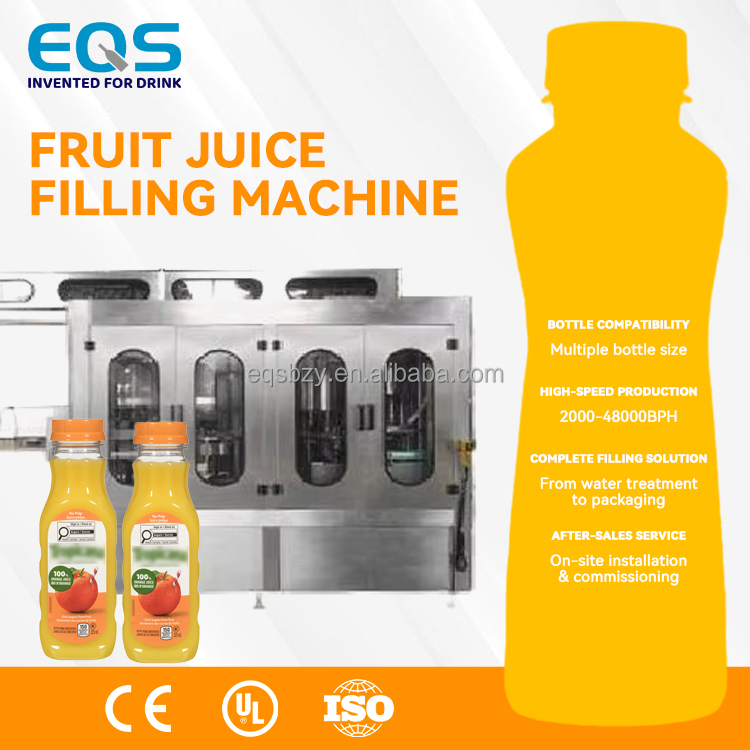
Fully Automatic 4-in-1 Fruit Juice Filling Machine With Pulp PET Bottle Hot Filling Beverage Bottling Line
- Temp Range: 85°C - 92°C Recirculation
- Control System: Siemens PLC + Touch Screen
- Application: Pulp Juice, Nectars, Tea
- Efficiency: ≥98.5% Line Availability
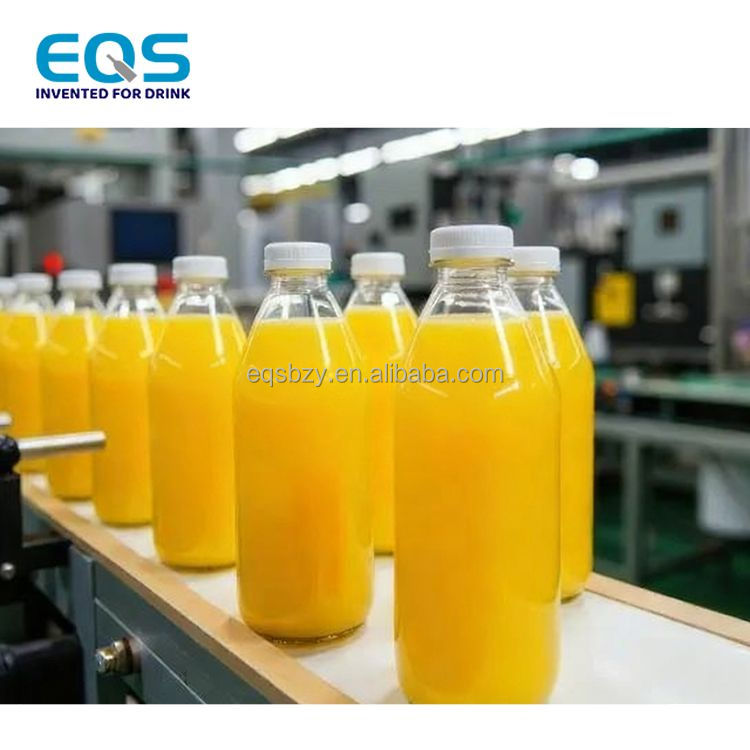
Industrial 4-in-1 Fruit Juice Filling Machine with Pulp PET Bottle Beverage Bottling Line Equipment
- Operation: Rinsing-Pulp-Juice-Capping
- Valves: Anti-Drip Servo Actuated
- Bottle Range: 250ml - 2000ml PET
- Cleaning: Automatic CIP Integrated
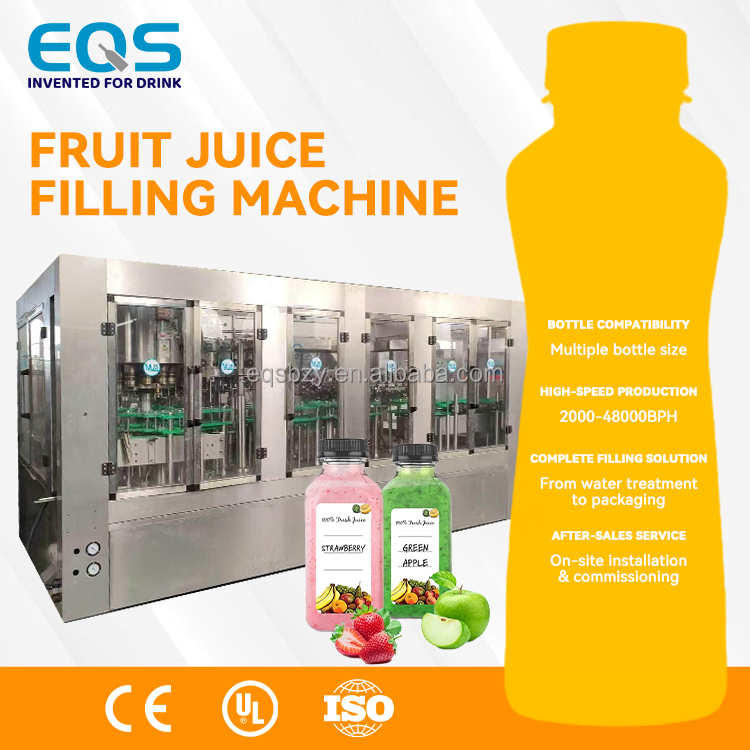
Automatic 20000BPH High Speed Glass Bottle Hot Filling Washing Filling Capping Monoblock for Fruit Juice Tea Drinks
- Container: Glass Bottle (Crown/Screw Cap)
- Throughput: 20,000 Bottles / Hour
- Feature: Negative Pressure Hot Fill
- Drive: Central Servo Synchronized
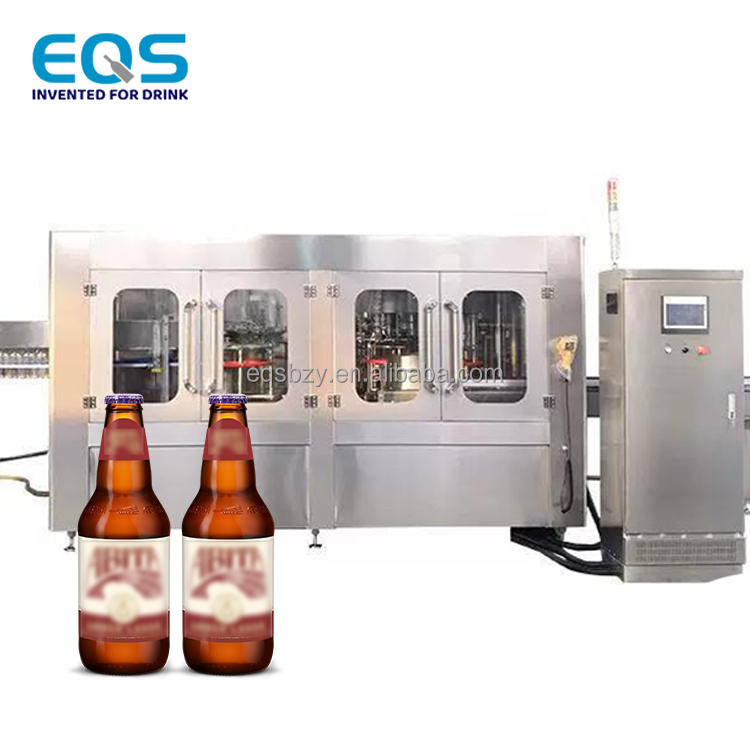
8000BPH Automatic Beer Glass Bottle Washing Filling Capping Machine Manufacturer for Isobaric Filling Line
- Filling System: Double Pre-Evacuation Isobaric
- DO Pickup: < 30 ppb Oxygen Control
- Application: Craft Beer, Cider, Sparkling Wine
- Cap Type: 26mm Crown Cap
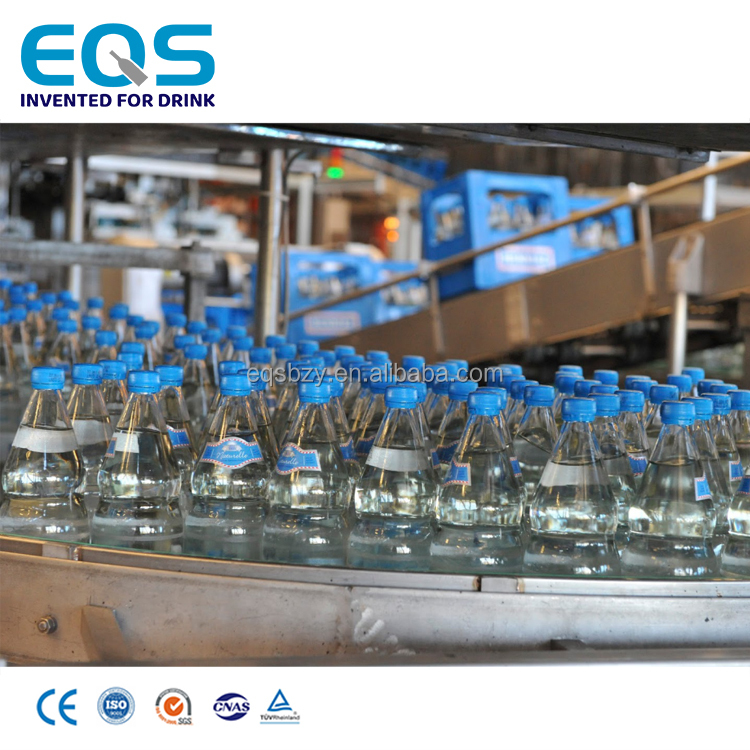
Premium Complete PET Bottle Water Bottling Production Line Filling Labeling Wrapping Case Packing
- Line Scope: Blow-Fill-Cap to Palletizing
- Water Source: RO Purified / Mineral Water
- Packaging: Hot Melt OPP / Shrink Pack
- Automation: Fully Automatic Monoblock
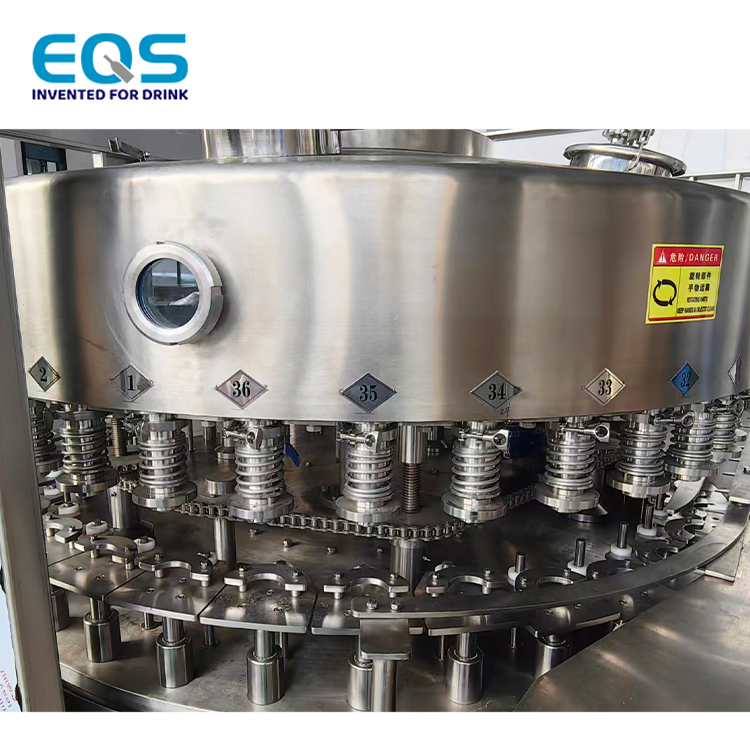
Industria 4-in-1 Pulp Fruit Juice Filling Machine for PET Bottle Bottling Line with Mixing System
- Blending Tech: Shear-Free Homogeneous Mixer
- Dosing Precision: ±0.5% Volume Accuracy
- Sanitary Standard: CIP / SIP Cleanable
- Bottle Neck: 28mm / 38mm Wide Neck
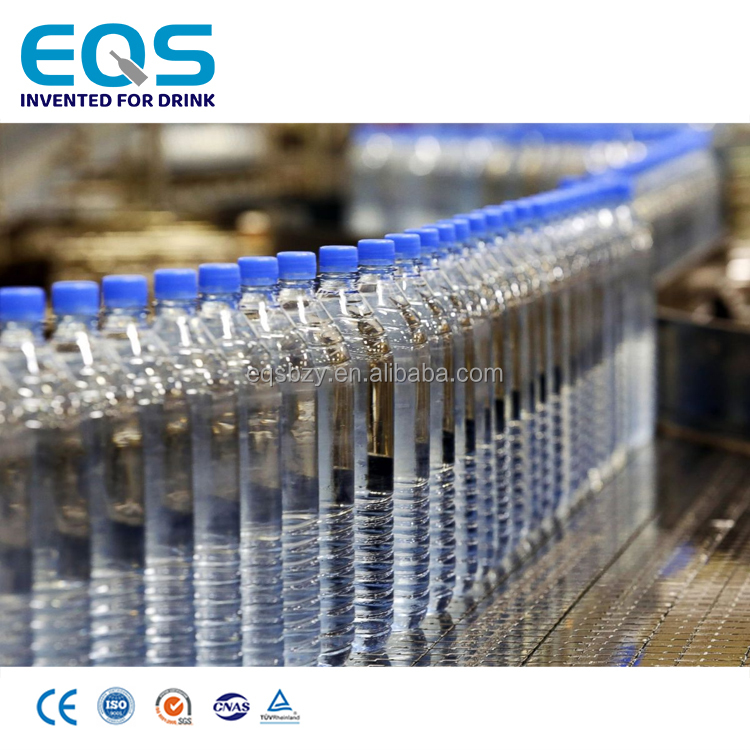
Fully Automatic Drinking Water Bottling Line for PET Bottle Filling Labeling Wrapping Packaging Solution
- Filling Mechanism: Normal Pressure / Gravity
- Capacity Range: 4,000 - 36,000 BPH
- Lightweighting: Supports Ultra-Thin PET Preforms
- Certifications: CE, ISO9001, Intertek Checked
Industry & Technological Trends in Soft Drink Bottling Machinery
The global non-alcoholic beverage market is undergoing a seismic operational transformation. Driven by stringent sustainability targets, volatile energy costs, and shifting consumer demand toward functional, low-sugar, and preservative-free soft drinks, bottling machinery manufacturers in China—specifically within the primary industrial machinery hub of Zhangjiagang, Jiangsu—have revolutionized machine architecture. Modern soft drink bottling plants are transitioning away from fragmented, standalone mechanical stations toward integrated, intelligent, and highly sterile production ecosystems.
1. The Shift from Standalone Lines to Blow-Fill-Cap (BFC) Combi-Blocks
Traditional beverage lines relied on long air-conveyor networks connecting stretch blow molders to separate rinsing-filling-capping monoblocks. This setup caused significant bottle friction, static electricity dust accumulation, and excessive floor space usage. Modern technology centers on the BFC Combi-Block system. By directly transfer-coupling preform blowing, sterile filling, and capping into a single servo-driven chassis:
- Footprint Reduction: Up to 35% savings in plant cleanroom floor area.
- Power Efficiency: Eliminates continuous air-blowing transport fans, saving up to 25% in plant electrical consumption.
- Container Flexibility: Enables the reliable handling of ultra-lightweight PET bottles (down to 9.5g for 500ml still water) without neck-buckling or jam-ups.
2. Isobaric Electro-Pneumatic vs. Mechanical Pressure Filling Dynamics
For carbonated soft drinks (CSD), sparkling waters, and beer, maintaining precise dissolved carbon dioxide ($\text{CO}_2$) levels while mitigating volume turbulence is critical. Traditional mechanical spring-loaded valves are rapidly being replaced by electro-pneumatic isobaric filling valves equipped with electromagnetic flowmeters (or mass flowmeters for pulp liquids).
| Performance Benchmark | Legacy Mechanical Isobaric Valve | Modern Electro-Pneumatic Flowmeter Valve |
|---|---|---|
| Filling Volume Accuracy | ±2.0 ml (Dependent on bottle neck tolerance) | ±0.5 ml (Absolute liquid mass measurement) |
| Dissolved $\text{CO}_2$ Loss | Moderate (Subject to mechanical vent turbulence) | Minimal (Controlled multi-stage snifting curves) |
| Product Changeover Time | 2.5 - 4 Hours (Manual level-tube adjustment) | < 15 Minutes (Recipe selection on PLC touchscreen) |
| Dissolved Oxygen ($\text{DO}$) Pickup | < 80 ppb (Single vacuum evacuation) | < 20 - 30 ppb (Double vacuum evacuation with $\text{CO}_2$ flush) |
3. Ultra-Clean and Aseptic Cold Filling (Preservative-Free Packaging)
With global health consumerism curbing the use of chemical preservatives like sodium benzoate, non-carbonated soft drinks (juices, teas, plant-based dairy, energy drinks) require ultra-clean or true aseptic processing. High-speed lines now incorporate Vaporized Hydrogen Peroxide (VHP) dry sterilization for PET preforms and bottle interiors, operating inside Class 100 isolator chambers with positive HEPA air filtration. This process grants non-carbonated soft drinks a 12-month ambient shelf life without degrading flavor molecules or heat-sensitive vitamins through harsh thermal pasteurization.
Future Procurement & Strategic Sourcing Trends for Global Buyers
When enterprise procurement executives and commercial beverage brands source soft drink bottling equipment from China, evaluation parameters have progressed far beyond initial quotation pricing. Procurement strategies for 2025–2030 focus heavily on operational resilience, lifecycle costs, and regulatory alignment.
1. Total Cost of Ownership (TCO) & OEE Optimization
Strategic buyers calculate TCO across a 10-year equipment lifecycle. While European packaging lines often demand massive upfront capital investments, leading Chinese manufacturers like Zhangjiagang OGVU Machinery Co., Ltd. deliver equivalent component quality—incorporating Schneider electricals, Siemens PLC processors, Festo pneumatics, and SEW drives—at a fraction of the CAPEX. Sourcing teams prioritize machines with high Overall Equipment Effectiveness (OEE) ratings (target ≥88%), low maintenance spare parts costs, and universal component availability.
2. Modular Line Scalability and Rapid Format Conversion
Market speed dictates packaging flexibility. Sourcing managers favor bottling monoblocks engineered with quick-change starwheels, tool-less guide rail adjustments, and multi-cap turrets capable of alternating between standard 28mm PCO1881 screw caps, 29/25 lightweight necks, and sport caps within a single shift.
3. ESG Alignment: Energy & Water Conservation Standards
Sustainability is no longer optional. Modern factory audits evaluate water-to-filled-product ratios. Advanced Chinese lines incorporate closed-loop CIP water recovery, multi-stage cascading rinse tanks, and energy-reclaiming blow mold infrared oven heaters that reduce kVA requirements by up to 30% compared to decade-old designs.
Enterprise Advantages: Why Partner with Zhangjiagang OGVU Machinery
Zhangjiagang OGVU Machinery Co., Ltd. stands as a premier design and manufacturing powerhouse in Jiangsu Province, China. Specializing in turnkey beverage packaging solutions, OGVU integrates rigorous mechanical engineering with comprehensive international export support, ensuring that beverage producers worldwide receive high-precision, reliable, and compliant machinery.
Intertek On-Site Verified
Our manufacturing premises, machine assembly workshops, and operational protocols undergo independent on-site audit and verification by Intertek, confirming real operational integrity.
11+ Years Export Experience
Over a decade of direct global trade experience. We engineer machines to match regional electrical profiles (220V-480V, 50/60Hz) and manage secure seaworthy wooden crate packaging.
Turnkey Plant Integration
We eliminate system bottlenecks by matching line speed across all stages: RO Water Treatment, Syrup Prep, Beverage Carbonators, Blowing, Filling, Labeling, Shrink Wrapping, and Palletizing.
Global On-Site Field Support
Expatriate commissioning engineers provide worldwide on-site installation, line tuning, and staff training. Fluent multi-lingual support available in English, Spanish, Russian, and Chinese.
Certified Material Metallurgical QC
Strict anti-corrosion standards. All liquid contact components utilize certified food-grade Stainless Steel SUS316L, while structural frames feature polished SUS304 with full trace certification.
Full Factory FAT Acceptance Testing
Every bottling line undergoes full load trial runs with client bottles and preforms at our Zhangjiagang factory before shipment, backed by video and live HD remote inspections.
Technical Sourcing & Sourcing FAQ
Ready to Sourcing High-Performance Chinese Bottling Lines?
Connect directly with our engineering team for specialized equipment technical sheets and line quotations.
Get Catalog