High-Performance Beverage Bottling Equipment
Turnkey solutions covering PET, glass, and aluminum can production for water, CSD, beer, and fruit juice.
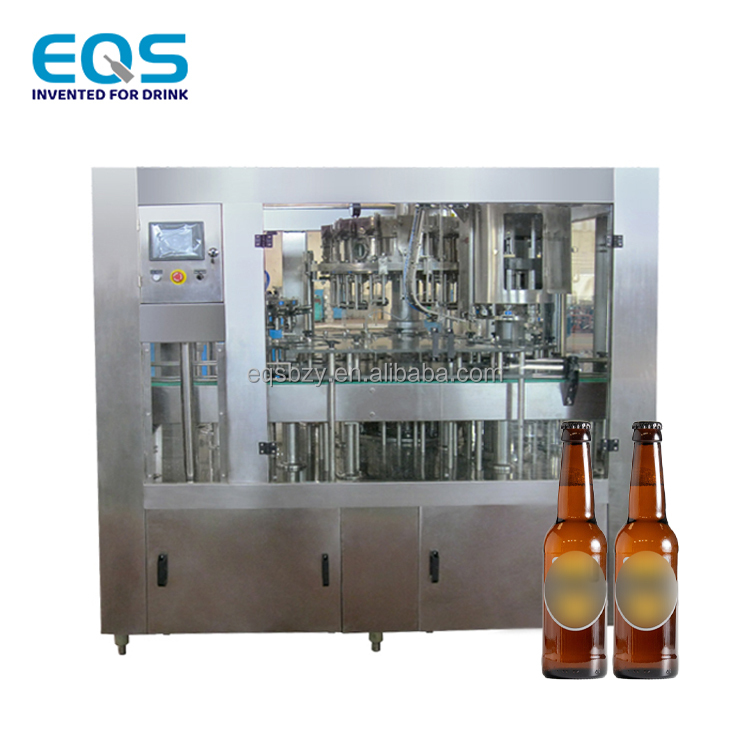 Isobaric 7000 BPH
Complete PET Bottle Beer Bottling Plant 7000BPH Isobaric Line
Integrated washing, counter-pressure filling, and capping monoblock designed for stable carbonation retention.
View Specifications →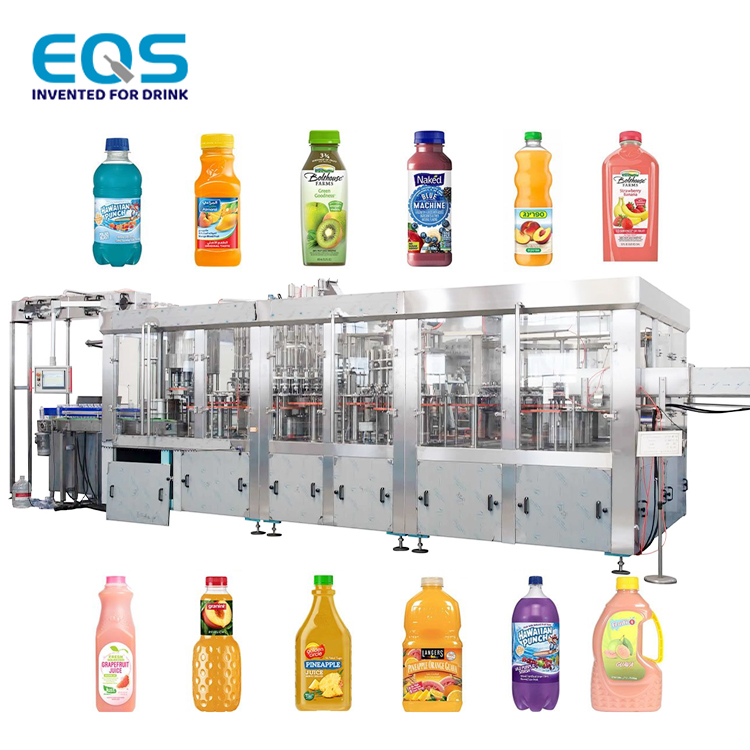 Hot-Fill 85-92°C
Industrial PET Bottle Fruit Juice Hot Filling Production Line
Thermally resistant bottling system equipped with juice recirculation loops and automatic CIP sanitization.
View Specifications →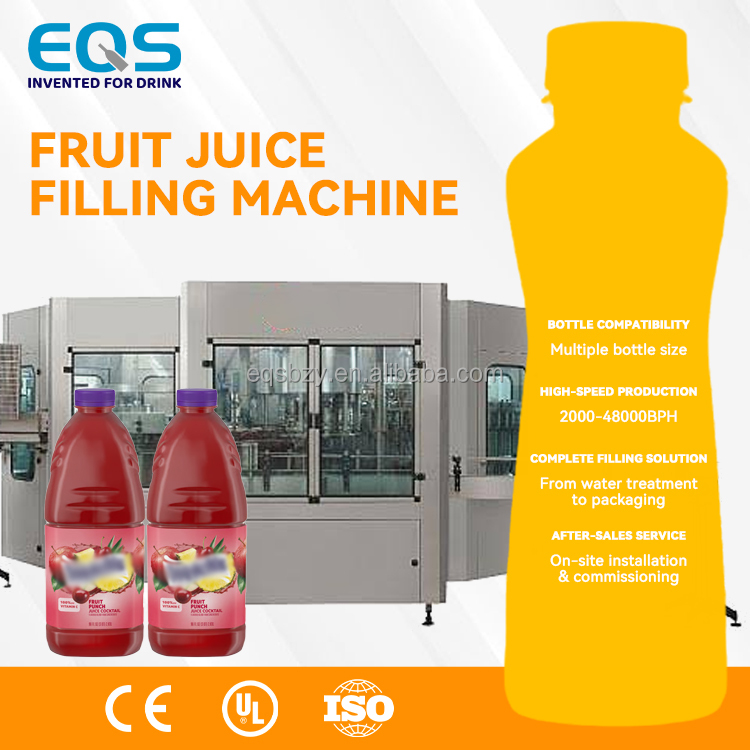 High-Viscosity Pulp
Fully Automatic Mango & Orange Juice Beverage Production Line
Specialized monoblock filling architecture handling pulp-containing fruit juices without valve clogging.
View Specifications →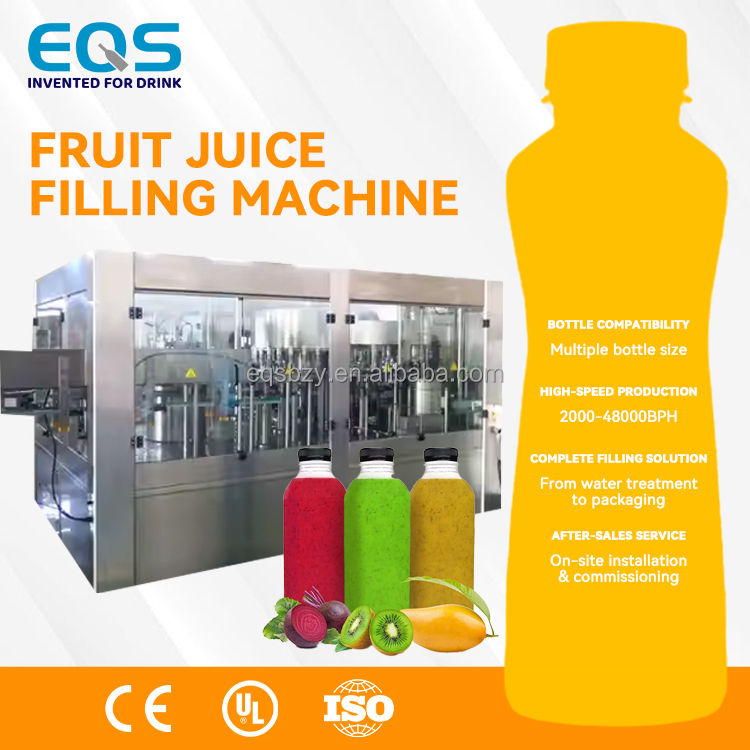 Can Seaming 2000 BPH
Complete 2000BPH Aluminum Can Juice Filling & Seaming Line
Compact rotary canning system built with precise mechanical double-seamers for leak-proof shelf stability.
View Specifications →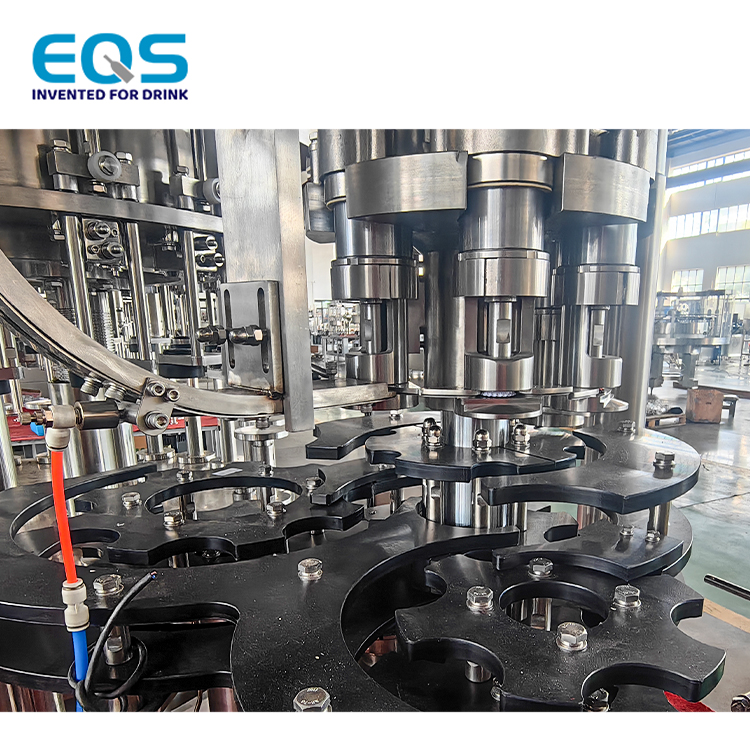 Glass & Crown Cap
High-Speed 3-in-1 Beer Washing Filling Capping Monoblock
Double pre-evacuation vacuum technology minimizing Total Package Oxygen (TPO) pick-up for craft beers.
View Specifications →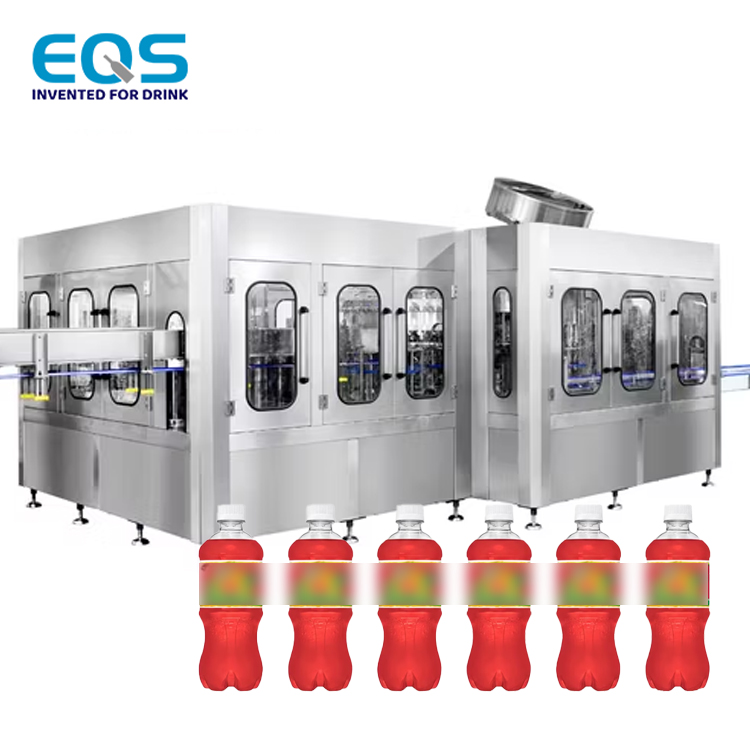 CSD & Energy Drinks
Complete Carbonated Soft Drink & Energy Drink Making Line
Heavy-duty CSD processing plant integrating water chilling, CO2 carbonation mixing, and isobaric filling.
View Specifications →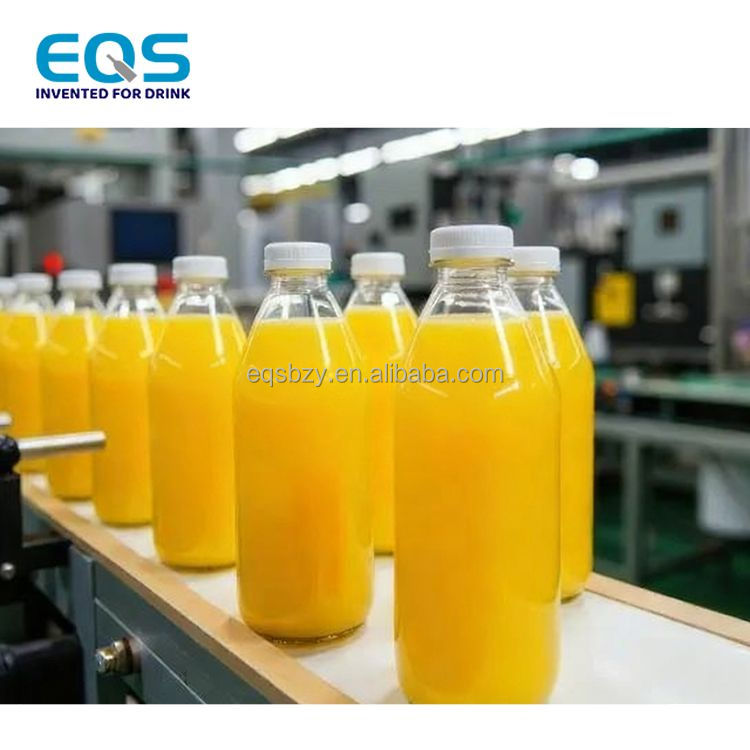 4-in-1 Monoblock
Industrial 4-in-1 Pulp Fruit Juice Bottling Equipment
Advanced 4-in-1 architecture combining bottle washing, pulp dosing, liquid hot-filling, and capping.
View Specifications →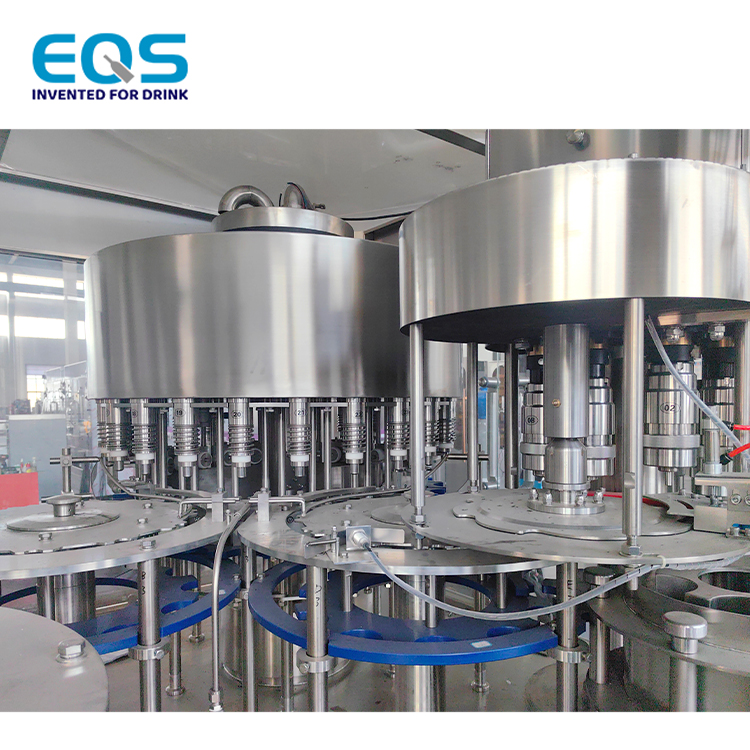 Glass & PET Water
Industrial End-to-End Water Bottling Plant Solution
Full-turnkey bottling facility with Reverse Osmosis purification, bottle blowing, filling, labeling, and packing.
View Specifications →The Engineering Architecture of Carbonated Soft Drink (CSD) Bottling
A comprehensive technical analysis of thermodynamic gas absorption, isobaric pressure management, and line balancing for high-output beverage plants.
In modern industrial beverage manufacturing, securing high operating efficiency (OEE) while maintaining tight quality parameters—such as precise carbonation volumes (g/L or Vol), zero net fill variation, and low dissolved oxygen—requires a deeply integrated engineering methodology. Procurement teams searching for China wholesale soft drink production line suppliers and wholesalers face complex choices ranging from individual machine sourcing to full turnkey line automation. Zhangjiagang OGVU Machinery Co., Ltd. addresses these challenges through custom-engineered monoblocks and balanced process systems.
1. Thermodynamic Fundamentals: Henry's Law & Isobaric Counter-Pressure Filling
The core mechanism of carbonated soft drink filling rests on Henry’s Law, which dictates that at a constant temperature, the amount of dissolved gas in a liquid is directly proportional to the partial pressure of that gas above the liquid. To achieve gas volume stability between 3.0 Vol and 4.5 Vol in carbonated beverages (sodas, sparkling waters, energy drinks):
Engineering Rule of Carbonation: Product temperature during carbonation and filling must be continuously maintained at 3°C to 5°C (37.4°F - 41°F). If the product temperature rises above 6°C, the solubility of CO2 drops exponentially, resulting in severe foaming at the filling valve, volumetric instability, and product loss.
Our isobaric counter-pressure filling valves utilize a precise 4-stage pneumatic filling cycle:
- Stage A (Pressurization): The filling valve seals tightly against the container neck (PET or Glass). High-purity CO2 gas is injected into the empty bottle until the internal pressure equals the gas-head pressure inside the central liquid bowl (typically 0.25 to 0.40 MPa).
- Stage B (Liquid Flow): Once pressure equilibrium is established, a mechanical spring or pneumatic actuator lifts the liquid valve cone. The beverage flows down the inner wall of the container via a swirl spreader plate, allowing displaced CO2 to return cleanly into the tank.
- Stage C (Settling & Fill Height Control): The liquid reaches the vent tube cutoff level, stopping flow naturally without turbulence.
- Stage D (Controlled Snifting/Decompression): A multi-stage exhaust valve releases the headspace gas slowly into a collection channel. Controlled snifting prevents flash-boiling and liquid eruption during neck seal disengagement.
2. Total Package Oxygen (TPO) Control in Beer & Sensitive CSD Lines
Dissolved oxygen is the main enemy of beverage shelf life, causing rapid oxidation, flavor degradation, and color shifts. For beer and high-end carbonated juices, our monoblocks integrate a Double Pre-Evacuation Vacuum System prior to isobaric gas charging:
1st Vacuum Evacuation
Pulls container headspace internal air down to -0.09 MPa vacuum, removing up to 90% of atmospheric oxygen.
CO2 Purging Cycle
Flushes the container with 99.99% pure CO2 gas to dilute and displace lingering oxygen molecules.
2nd Vacuum & Seal
Re-evacuates the bottle to -0.095 MPa before final isobaric equalization, achieving TPO levels < 0.05 mg/L.
3. Full Line Modular Architecture: From Water Purification to Final Palletization
A true turnkey soft drink bottling plant is an integrated biological and mechanical ecosystem. Zhangjiagang OGVU Machinery designs every subunit to match line speed, avoiding bottlenecks across all stages:
| Process Module | Core Technical Specifications | Engineering Purpose & Value |
|---|---|---|
| 1. Water Treatment (RO) | Multi-media sand/carbon filter, Double-Pass Reverse Osmosis, Ozone & UV sterilizer. | Removes dissolved solids, silica, and micro-organisms to ensure pure water base for beverage mixing. |
| 2. Syrup Prep & Dissolving | High-shear sugar melting tank, plate heat exchanger, double-stage duplex filters. | Prepares clean, pasteurized liquid sugar matrix at precise Brix levels without caramelization. |
| 3. CO2 Carbonator Mixer | Proportional mass flow meter, vacuum deaeration tower, static inline injector. | Deaerates water to < 0.5 ppm O2 and injects accurate CO2 volumes (up to 5.0 g/L) under chilled conditions. |
| 4. Stretch Blow Molding | Servo-driven preform heating, pneumatic stretch rods, 40-bar high-pressure blowing. | Produces lightweight, uniform PET bottles with consistent neck finish tolerances. |
| 5. 3-in-1 Monoblock Filler | SUS316L liquid path, rotary magnetic capping heads, touch-screen PLC automation. | Rinses, fills, and caps containers within a cleanroom enclosure to prevent contamination. |
| 6. Warm-up & Labeling | Tunnel bottle warmer, hot-melt OPP labeler / shrink sleeve applicator. | Raises bottle temperature above dew point to prevent condensation during automatic labeling. |
| 7. End-of-Line Packaging | Automatic PE film shrink wrapper, case packer, robotic column palletizer. | Bundles finished products into stable 3x2, 4x3 packages ready for long-distance export transport. |
Future Trends in Soft Drink Production Procurement (2025–2030)
Key technological shifts reshaping global beverage machinery sourcing, sustainability, and plant design.
1. Transition to Aseptic Cold-Fill
Global bottlers are moving away from traditional hot filling (85°C) to Dry-Aseptic PET Packaging. By sterilizing preforms with hydrogen peroxide (H2O2) vapor and filling at ambient temperatures (20°C), bottlers preserve fresh product flavors, reduce PET bottle weight by 25-30%, and lower thermal energy bills by up to 45%.
2. Combi-Block System Integration
Decoupled blow molders and fillers connected via long air conveyors are being replaced by integrated Blowing-Filling-Capping Combi-Blocks. Eliminating bottle rinsers, air conveyors, and intermediate storage reduces factory footprint by 35%, lowers electrical consumption, and removes secondary air contamination risks.
3. Industry 4.0 & Smart Predictive Maintenance
Modern production lines feature IO-Link smart sensors, edge computing controllers, and cloud telemetry. Operators track real-time OEE, monitor bearing vibration signatures in filling carousels, and detect valve leakage automatically, minimizing unscheduled plant downtime.
Zhangjiagang OGVU Machinery: Enterprise Advantages
Built upon 11+ years of manufacturing excellence, certified quality management, and global field support.
Intertek On-Site Verified Manufacturing Hub
Located in Zhangjiagang, Jiangsu Province—China’s premier industrial cluster for beverage packaging technology—Zhangjiagang OGVU Machinery Co., Ltd. operates fully audited manufacturing facilities. Our premises, production lines, and quality control systems have undergone rigorous on-site verification by Intertek, providing global buyers with transparent supply chain security.
Full Single-Source Line Accountability
Mixing machinery from multiple uncoordinated factories leads to mismatched transfer heights, conveyor jams, control protocol conflicts, and finger-pointing during breakdowns. OGVU engineers design, build, test, and program your entire bottling plant under one roof—giving you one single point of accountability from contract to commercial production.
Expatriate Field Engineers & Multi-Lingual Team
Smooth execution depends on effective communication. Our engineering and export service teams operate fluently in English, Spanish, Russian, and Chinese. We dispatch senior commissioning technicians to your plant site worldwide for installation, mechanical alignment, electrical integration, and operator training.
Rigorous FAT (Factory Acceptance Testing)
Before any container leaves our facility, your complete beverage production line undergoes intensive continuous FAT testing using your specific bottle preforms, caps, and liquid products. Detailed video inspections, fill-accuracy documentation, and electrical safety certificates are issued prior to export packing.
Frequently Asked Questions by Beverage Procurement Officers
Detailed technical answers addressing common engineering, operational, and commercial queries.
- Still Water / Mineral Water: Uses gravity or low-pressure mechanical filling valves.
- Carbonated Soft Drinks (CSD) & Beer: Requires isobaric (counter-pressure) filling with CO2 gas equalization to keep carbonation in solution without foaming. Beer also requires double pre-evacuation vacuuming to control oxygen.
- Fruit Juices & Teas (Preservative-Free): Requires hot filling (85°C–92°C) into heat-resistant PET/Glass bottles or sterile Aseptic filling at ambient temperatures.
- Viscous Products (Sauces & Oils): Requires piston fillers or electronic flow-meter / weighing fillers.
- Target beverage types (CSD, still water, pulp juice, beer, etc.) and carbonation level (g/L).
- Container materials (PET, Glass bottle, Aluminum can) and drawings/samples.
- Required output speed in Bottles Per Hour (BPH) based on 500ml standard format.
- Labeling style (OPP hot-melt, PVC shrink sleeve, pressure-sensitive sticker).
- Packaging format (Film shrink bundle, cardboard tray, wrapped case).
- Plant workshop dimensions (Length x Width x Height) and local electrical power standard (e.g., 380V/50Hz/3Phase).
Ready to Engineer Your Soft Drink Bottling Line?
Share your container specifications, target hourly output, and plant dimensions with our senior engineering team. Receive a complete technical proposal, CAD workshop layout, and factory-direct price quotation within 24 hours.